
Built for the Future Fight: Decision Advantage at the Tactical Edge
The future Army will be defined by the speed of deployment, connectivity, understanding, and decision-making.
Introduction
The future Army will be defined by speed: speed of deployment, connection, understanding, and decision. As outlined in The Army Azimuth, tomorrow’s force must be ready, resilient, interoperable, data-driven, and able to outpace adversaries across every domain.
DTECH helps make that vision operational with capabilities built for mission environments. Rugged edge computing, secure networking, AI-ready processing, and mission-critical data infrastructure give warfighters the digital foundation they need to connect, process, protect, and act on information where it matters most: at the tactical edge.
This article looks at how deployable infrastructure, edge processing, interoperability, AI readiness, resilience, and an iterative approach to capability development help translate The Army Azimuth from strategic direction into practical mission capability.
Rapid Response Starts with Deployable Infrastructure
Defending the homeland and responding to crisis requires technology that can move as fast as the mission. Whether supporting domestic operations, disaster response, forward command posts, or emergency communications, Army teams need systems that deploy quickly, configure confidently, and perform reliably in demanding environments.
Through its Family of Systems, DTECH provides rugged, deployable compute and networking platforms that bring secure connectivity and local processing closer to the point of need. Instead of waiting on fixed infrastructure or distant data centers, commanders and responders can access mission-critical data at the edge, improving situational awareness, operational continuity, and response speed when every second counts.
Turning Mission Data into Warfighting Advantage
Modern operations generate more data than ever before, but data alone does not create advantage. The advantage comes from turning information into insight quickly enough to influence the mission. In contested, austere, and bandwidth-limited environments, that means processing data closer to where it is collected and where decisions are made.
These capabilities enable tactical teams to host mission applications, support AI/ML processing, connect sensors, and move data securely across the mission chain. This helps compress the time between sensing, understanding, and acting, giving warfighters the ability to make faster, better-informed decisions even when reach-back connectivity is degraded or unavailable.
“The Army Azimuth sets a clear direction for a force that can move faster, connect smarter, and decide with confidence in contested environments. DTECH is already helping turn that ambition into operational reality by bringing rugged edge compute, secure networking, AI-ready processing, and open mission architectures closer to the soldiers and commanders who need them most. The forces that win the future fight will be those that can turn data into action at the edge, and that is exactly where DTECH is focused.”
Anthony Verna, GM & SVP, DTECH Mission Solutions
Designed to Move with the Mission
The Army’s ability to project power depends on capabilities that can be deployed wherever needed: in a command post, a vehicle, a forward operating location, or alongside coalition partners. Traditional infrastructure is often too slow, too static, or too complex for missions that must adapt in real time.
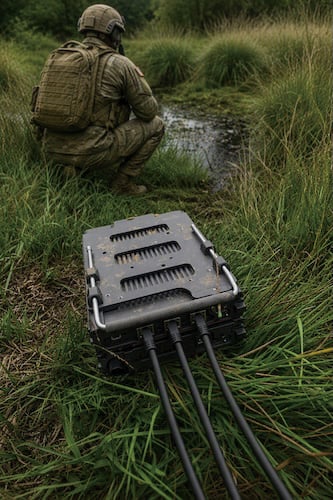
Our platforms are modular, expeditionary, and built for operational flexibility. They support an iterative design model that helps users scale compute, networking, and application support across multiple environments without rebuilding the mission architecture from scratch. For joint, allied, and forward-deployed teams, that means faster setup, simpler integration, and greater confidence in the field.
Connecting the Multidomain Battlefield
Future operations will not unfold in neat, separate domains. Land, cyber, space, electronic warfare, intelligence, and AI must work together as part of a connected mission ecosystem. To make that possible, data must move securely between sensors, applications, commanders, and warfighters.
That mission infrastructure helps connect the critical pieces. With edge compute and secure networking at the tactical edge, forces can break down data silos, support command and control, enable ISR workflows, host mission applications, and move information to the people and systems that need it most. The result is a more connected, more informed, and more responsive force.
Readiness Built into the Architecture
Readiness is not simply having technology available. It is having technology that can be deployed, configured, operated, and trusted in real-world conditions. Systems that are fragile, difficult to integrate, or dependent on perfect connectivity create friction at the exact moment forces need momentum.
Built for demanding operational environments and rapid deployment, these solutions bring ruggedized platforms, modular configurations, and mission-ready connectivity together to reduce complexity and increase agility. This supports iterative learning in the field, allowing Army teams to field capability faster, adapt to changing mission needs, and maintain continuity in challenged communications environments.
Enabling Convergence Where It Counts
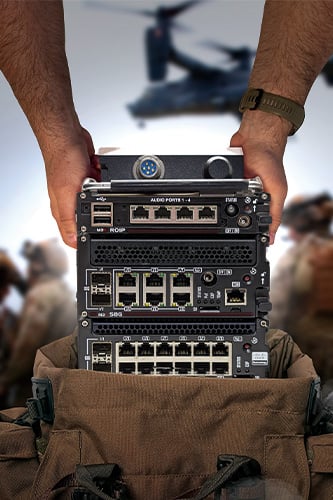
Joint all-domain operations depend on convergence, the ability to bring capabilities, systems, data, and decision-makers together at the right time. That requires more than connectivity. It requires secure networking, application hosting, cloud and disconnected cloud integration, and the ability to keep mission data available even when centralized resources are hard to reach.
The DTECH Family of Systems helps deliver convergence at the edge by supporting distributed computing and mission application hosting closer to users. This keeps critical applications and data available where decisions are made, helping tactical teams maintain tempo and operate with greater resilience across connected and disconnected environments.
Interoperability for Joint and Coalition Operations
No force operates alone. The future Army must share information, coordinate action, and operate effectively with joint, allied, and mission partners. Interoperability is therefore a mission requirement, not a technical preference.
Open architectures, secure connectivity, and multi-domain networking capabilities support interoperability across joint and coalition operations. By helping different users, systems, and environments work together more effectively, these capabilities enable forces to share data with confidence, reduce integration friction, and operate with greater unity of effort.
AI-Ready at the Edge
AI can help forces understand complex environments faster, but only if the right compute and data infrastructure is available where the mission happens. Sending every data set back to a distant cloud is not always practical in disconnected, degraded, intermittent, or limited-bandwidth environments.
High-performance edge compute and AI-ready processing bring analysis closer to the warfighter. This enables local insight, faster understanding, and support for autonomous and semi-autonomous workflows. When every second matters, edge AI helps forces reduce data overload, identify what matters, and move from information to decision advantage.
Resilience in Contested Environments
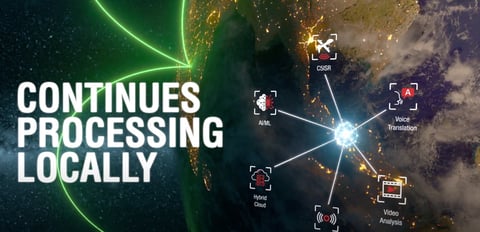
Contested environments demand technology that can keep operating under pressure. Forces must maintain communications, protect data, reinforce forward areas, and keep making decisions even when infrastructure is degraded, threatened, or unavailable.
Mission-ready edge infrastructure helps strengthen resilience in austere and contested conditions. Secure communications, local processing, distributed mission systems, and rugged design help teams stay connected, maintain awareness, and continue the mission in unpredictable environments.
The Mission Outcome: Faster Decisions, Stronger Connections, Greater Advantage
In practical terms, this is where strategy becomes capability: data closer to the mission, applications closer to the user, and decisions closer to the moment that matters.
The Army Azimuth points toward a force that is more connected, more interoperable, more resilient, and more capable of acting at speed. Delivering that vision requires a digital foundation that can move with the mission, perform where traditional infrastructure cannot, and keep critical data available when decisions cannot wait.
That foundation is delivered through rugged edge computing, secure networking, AI-ready processing, and open mission architectures. Together, these capabilities help the Army and its partners connect critical data, deploy capability faster, and turn information into operational advantage.